

How Long Does a Fever Last With the Flu Compared to Other Viral Illnesses?
A fever may occur with influenza and many other viral infections, but its duration can vary depending on the type of illness, symptom severity, and individual health factors. At Universal Primary Care, our team evaluates fever patterns, accompanying symptoms, hydration, medical history, and overall condition to help determine whether home care, diagnostic testing, or further medical attention may be appropriate. For more information, contact us today or book an appointment. We are conveniently located at 2121 Niles Street, Suite 200, Bakersfield, CA 93305.
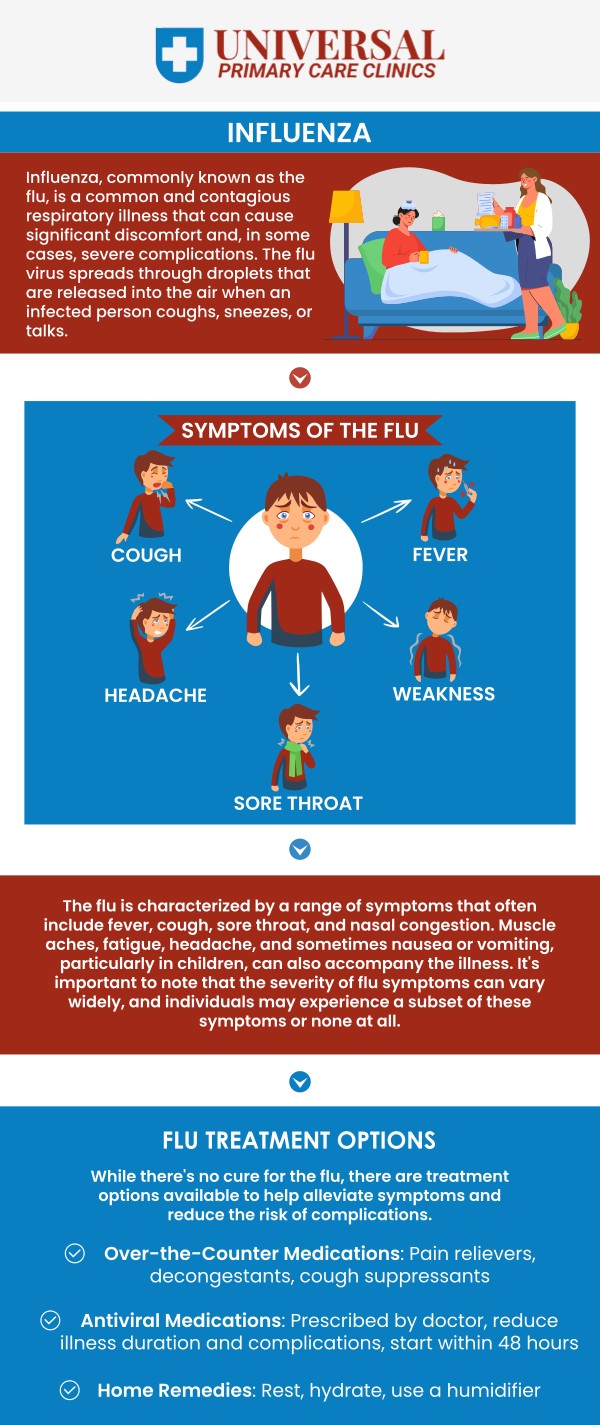
Table of Contents:
How many days does a fever typically last with the flu?
Can flu-related fever return after temporarily improving?
How does a flu fever differ from a common cold fever?
When is a persistent fever a reason to seek medical care?
Can children and adults experience different fever durations with the flu?
How does our team evaluate prolonged flu fever at Niles Primary Care Clinic?
A fever caused by influenza commonly lasts about two to four days, although the exact duration varies from person to person. It often begins suddenly alongside chills, body aches, headache, tiredness, and respiratory symptoms. Some people with the flu may not develop a measurable fever at all.
The fever usually improves before every other symptom disappears. Cough, weakness, and low energy may continue for several days or even longer after the temperature returns to normal. Most uncomplicated flu symptoms resolve within three to seven days, but recovery may take longer in older adults or people with chronic health conditions.
Universal Primary Care can evaluate a fever that is lasting longer than expected, becoming more intense, or occurring with breathing problems, dehydration, chest discomfort, or worsening weakness. Our team considers the person’s age, symptom timeline, medical history, temperature pattern, and overall condition when recommending the next steps.
Yes, a flu-related fever can return after appearing to improve. Sometimes body temperature fluctuates during the early stages of a viral infection, particularly as the immune system continues responding. A mild temperature change does not always mean that the illness has become more serious.
However, a fever that disappears and then returns, especially with a worsening cough, shortness of breath, chest pain, severe weakness, or increasing fatigue, may be a warning sign of a complication or another infection. The CDC lists fever or cough that improves and then returns or worsens among symptoms that should prompt medical attention.
Universal Primary Care evaluates returning fever by reviewing how long it was absent, how high it has become, and whether new symptoms have developed. Our team may assess breathing, hydration, oxygen level, lung sounds, and other findings to determine whether further testing or closer monitoring is appropriate.
A flu fever usually begins more suddenly and may occur with chills, pronounced body aches, headache, exhaustion, and a dry or persistent cough. Influenza symptoms tend to be more intense than cold symptoms, although the pattern can differ among individuals.
A common cold generally develops more gradually and is more strongly associated with sneezing, nasal congestion, a runny nose, and a sore throat. When older children or adults develop a fever with a cold, it is often low-grade. Symptoms alone may not always distinguish the illnesses because several respiratory viruses can produce similar signs.
Universal Primary Care considers the speed of symptom onset, fever pattern, respiratory symptoms, recent exposure, and seasonal illness activity when evaluating a possible cold or the flu. Our team can determine whether clinical testing or additional evaluation may help clarify the cause.
Medical evaluation should be considered when a fever continues longer than expected, repeatedly returns, or becomes progressively higher. A fever lasting more than three or four days may need assessment, particularly when the illness is not otherwise improving.
More urgent care may be required when fever occurs with difficulty breathing, chest or abdominal pressure, confusion, seizures, severe weakness, dehydration, or reduced urination. Infants younger than 12 weeks should receive prompt medical evaluation for any fever, while very high temperatures in children also require timely attention.
Universal Primary Care helps determine whether persistent fever may be related to influenza, another viral illness, a secondary infection, or an unrelated condition. Our team assesses the full symptom pattern rather than relying only on the temperature reading, allowing care recommendations to reflect the individual’s age, risks, and overall health.
Yes, children and adults may experience different fever patterns during influenza. In many children, a flu fever lasts approximately two to three days, but younger children can develop higher temperatures and may remain symptomatic longer. Children may also experience vomiting or diarrhea more often than adults with influenza.
Adults often experience fever, chills, muscle aches, fatigue, and cough for several days, although not every adult develops a fever. Age alone does not determine the duration; immune response, vaccination status, underlying medical conditions, and the severity of the infection can influence recovery.
Our team evaluates children and adults according to age-specific symptoms and risks. Our team pays particular attention to young children, older adults, pregnant individuals, and people with chronic conditions because these groups may have a greater likelihood of developing flu-related complications.
An evaluation generally begins with a detailed review of when the fever started, its highest recorded temperature, whether it improved and returned, and which symptoms occurred alongside it. The clinician may also ask about recent flu exposure, hydration, breathing difficulties, underlying medical conditions, and any changes in alertness or activity.
The physical examination may include checking temperature, heart rate, breathing rate, oxygen level, hydration, throat, ears, and lung sounds. Because influenza, the common cold, and other respiratory infections can overlap in their presentation, testing may be considered when the result could help guide the care plan.
At Universal Primary Care’s Niles Primary Care Clinic, our team evaluates the complete illness pattern to identify signs of prolonged viral infection or possible complications. Based on the findings, we may recommend supportive care, diagnostic testing, continued observation, or a higher level of medical attention when symptoms are present. For more information, contact us today or book an appointment. We are conveniently located at 2121 Niles Street, Suite 200, Bakersfield, CA 93305. We serve patients from Bakersfield CA, Maltha CA, Kayandee CA, Panama CA, Arvin CA, Fairfax CA, Rosedale CA, and surrounding areas.
Check Out Our 5 Star Reviews



Additional Services You May Need
▸ Annual Physical Exam
▸ COVID-19 Testing
▸ Chronic Disease Management
▸ Vaccinations
▸ STD Testing
▸ Primary Care
▸ Influenza (Flu)
▸ Common Cold
▸ Asthma
▸ Medical Weight Loss
▸ Diabetes
▸ School Physicals Exam
▸ Sports Physicals
▸ EKG
▸ Geriatric Care
▸ View All Services


 Send Text
 How May I Help You?