

Influenza (Flu) Testing and Treatment at Universal Q-Street Primary Care in Bakersfield, CA
At Universal Primary Care, our team provides comprehensive influenza (flu) testing and targeted treatment to ensure fast recovery. We offer accurate diagnostics and tailored care plans to help manage your flu symptoms effectively, getting you back to feeling your best. Rely on our expertise to navigate flu season with confidence and ease. For more information, contact us or book an appointment online. 3550 Q St Ste 201, Bakersfield, CA 93301.
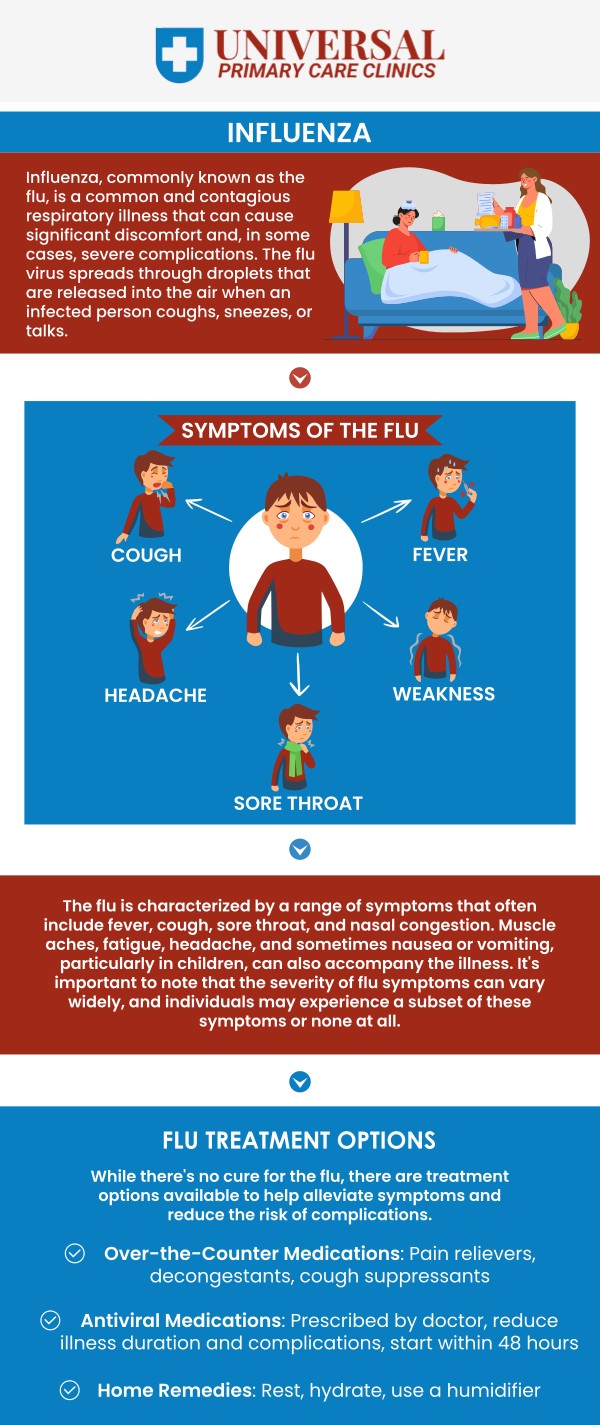
Table of Contents:
Can you test negative for the flu and still have symptoms?
What’s involved in a nasal swab flu test procedure?
Are flu tests safe for patients with respiratory sensitivities?
When should you follow up with a provider after flu treatment begins?
What should you do if your flu test comes back positive?
Ongoing Support and Guidance During Flu Recovery at Universal Q-Street Primary Care in Bakersfield, CA
We understand that navigating flu season can be confusing, especially when your symptoms don’t match your test results. It’s important to know that it is possible to test negative for the flu and still experience symptoms that are consistent with influenza. This situation can occur for several reasons:
● Test Sensitivity: The accuracy of flu tests can vary. Rapid influenza diagnostic tests, which are commonly used in many medical settings, are less sensitive than more advanced molecular tests. This means they might sometimes give false-negative results, especially if the amount of virus in your body is low.
● Timing Matters: The timing of your flu test is crucial. If your test is performed too early or too late in your illness, there might not be enough virus in your nose or throat to detect. Additionally, improper sample collection or handling can affect the results.
● Other Viruses: Many other respiratory viruses—such as the common cold, RSV, or even COVID-19—can cause symptoms similar to the flu. Therefore, a negative flu test doesn’t necessarily mean you don’t have a viral infection.
Our providers take a comprehensive approach to your health. If you have flu-like symptoms, we encourage you to schedule a visit with us. Our team will review your symptoms, medical history, and potential exposures. We may recommend additional testing or treatment if needed. In some cases, our clinical team may use their judgment to diagnose and treat you for the flu, even if your test results are negative.
At Universal Primary Care, your health and comfort are our top priorities. If you’re experiencing symptoms of the flu, our team may recommend a nasal swab flu test—a quick and straightforward procedure designed to accurately detect influenza viruses in your respiratory system.
When you arrive at Universal Primary Care for your flu test, one of our trained healthcare professionals will guide you through each step. You’ll be asked to tilt your head back slightly. Using a long, flexible swab with a soft tip, we’ll gently insert the swab into one of your nostrils. The swab is carefully advanced to the upper part of the throat behind your nose (the nasopharynx), where it collects a sample of mucus and cells.
You may feel mild discomfort or a tickling sensation during the process, and it’s normal to have the urge to sneeze or cough, but the procedure is brief and not typically painful. The entire swabbing process usually takes less than a minute.
Once the sample is collected, it’s placed in a sterile container and either sent to a laboratory or processed right here at Universal Primary Care using a rapid flu test or advanced molecular testing, depending on your situation. Rapid test results are often available within minutes, while molecular diagnostics may take several hours to a day.
After your nasal swab, you can resume your usual activities right away. Our providers will discuss your results with you as soon as they are available and help you understand your next steps for care.
We understand that flu season brings special concerns—especially for our patients with respiratory sensitivities such as asthma, COPD, or other chronic lung conditions. Accurate and timely flu testing is an important part of how we care for you, but we also know you may have questions about the safety and comfort of these tests.
Most flu tests, including the rapid influenza diagnostic tests (RIDTs) and molecular tests, involve taking a sample from your nose or throat. Usually, this means a gentle swab of the back of your nose using a soft-tipped nasopharyngeal swab. While this may cause brief discomfort—like coughing, sneezing, gagging, or a mild nosebleed—serious complications are very rare.
Our team is trained to perform these tests as gently and efficiently as possible, always prioritizing your comfort and safety. If you have special concerns—such as a history of severe nosebleeds, recent nasal surgery, or extreme sensitivity—please let us know before your test. In some cases, we may be able to use alternative methods, like a throat swab, though these may be slightly less sensitive.
Your well-being comes first. We believe the benefits of accurate, rapid flu diagnosis—including starting treatment quickly and reducing your risk of complications—usually far outweigh the brief discomfort of the test. However, your comfort matters to us. If you have any questions or concerns about flu testing, please discuss them with your provider. Together, we’ll make sure you have the safest and most comfortable testing experience possible.
After starting treatment for the flu, it’s important to monitor your symptoms closely. We recommend that you follow up with our office if you do not begin to feel better within 3 to 5 days after starting antiviral medication or supportive care. Please contact us promptly if your symptoms worsen at any time—for example, if you develop shortness of breath, chest pain, confusion, persistent vomiting, or a high fever that does not improve with medication.
Certain groups—such as young children, adults over 65, pregnant women, and patients with chronic medical conditions—are at higher risk for flu complications. If you fall into one of these categories, we encourage you to stay in close contact with us for guidance and to schedule a follow-up appointment if needed.
If you experience any new or concerning symptoms or if you are unsure about your recovery, don’t hesitate to call us. Our team is here to support you throughout your illness and recovery.
If your flu test comes back positive, it’s important to take steps to care for yourself and prevent spreading the infection to others. First and foremost, follow the specific instructions provided by your provider. Our team may recommend antiviral medications, especially if you are at higher risk for complications—such as being very young, elderly, pregnant, or living with chronic health conditions. Antiviral medications work best when started within the first two days of symptoms, so begin them as soon as possible if prescribed by your Universal Primary Care clinician.
To support your recovery at home, make sure to get plenty of rest and drink fluids to stay hydrated. Over-the-counter medications can help reduce fever and relieve body aches. We recommend staying home from work, school, and other public places until you have been fever-free for at least 24 hours without the use of fever-reducing medicine. This helps protect your community by reducing the spread of the virus.
Practice good hygiene: cover your mouth and nose when coughing or sneezing, wash your hands often, and clean surfaces that may be contaminated. If you live with others, try to stay in a separate room and, if possible, use a different bathroom.
Be alert for signs that your illness is getting worse. Seek immediate medical attention—either by contacting us or going to the emergency room—if you experience trouble breathing, chest pain, persistent vomiting, confusion, or a high fever that does not improve. Children, older adults, pregnant women, and people with chronic illnesses should be especially careful and notify us promptly if symptoms worsen.
Recovery from the flu can take time, and ongoing support is essential for a smooth healing process. At Universal Primary Care, we stay connected with you throughout your recovery, offering advice on managing symptoms and preventing the spread of the virus to others. Our team is always available to answer questions and provide follow-up care to ensure that you fully recover and stay healthy.
Finally, keep Universal Primary Care updated if you have concerns or if your symptoms do not improve after a few days. Our care team is here to support you throughout your recovery. By following these steps, you can help yourself recover more quickly and protect those around you. For more information, contact us or book an appointment online. We are conveniently located at 3550 Q St Ste 201, Bakersfield, CA 93301. We serve patients from Oakridge, Lonsmith, Fairfax, Kayandee, Southgate, and surrounding areas.
Check Out Our 5 Star Reviews



Additional Services You May Need
▸ Annual Physical Exam
▸ COVID-19 Testing
▸ Chronic Disease Management
▸ Vaccinations
▸ STD Testing
▸ Primary Care
▸ Influenza (Flu)
▸ Common Cold
▸ Asthma
▸ Medical Weight Loss
▸ Diabetes
▸ School Physicals Exam
▸ Sports Physicals
▸ EKG
▸ Geriatric Care
▸ View All Services


 Send Text
 How May I Help You?