

Influenza (Flu) Testing and Treatment at Brimhall Primary Care Center in Bakersfield
At Universal Primary Care, our team offers thorough influenza (flu) testing and effective treatment to help you feel better faster. We provide accurate diagnosis and personalized care to manage your flu symptoms and support a quick recovery. Trust our team for expert care and guidance during flu season. For more information, contact us or book an appointment online. We are conveniently located at 8325 Brimhall Rd, Bakersfield, CA 93312.
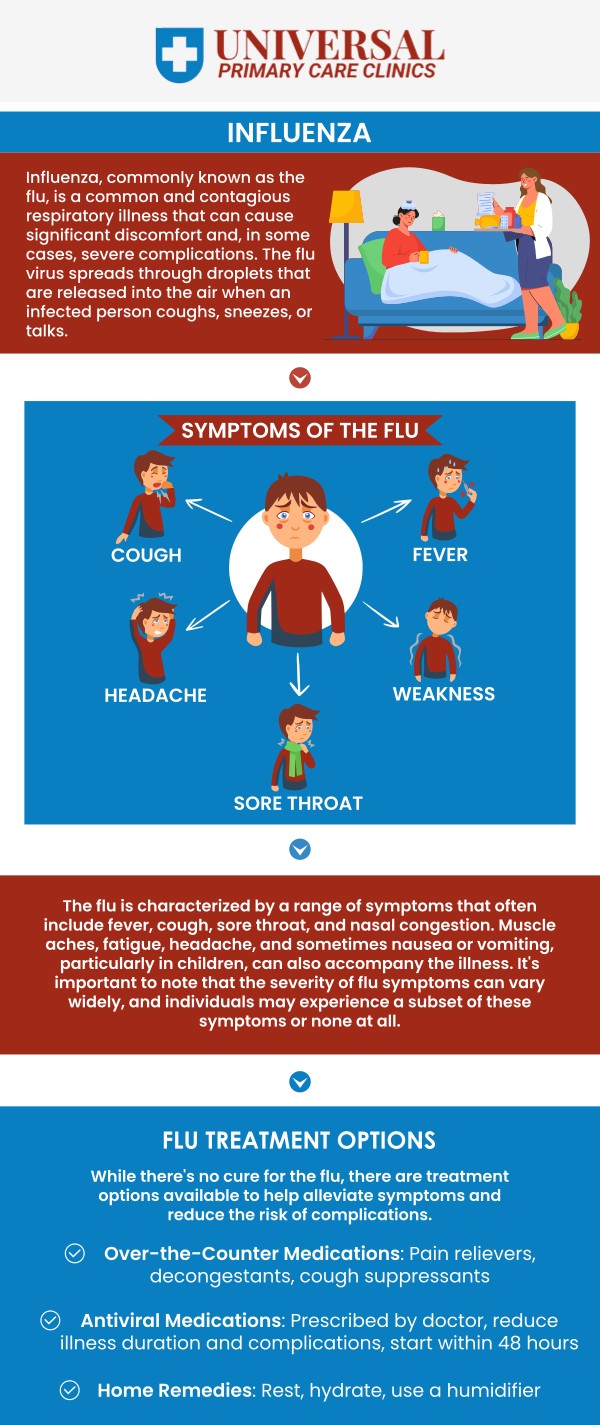
Table of Contents:
What are the first signs that you might need a flu test?
How does a flu test determine whether it’s influenza or another illness?
Are rapid flu tests as reliable as lab-based influenza testing?
How long does it usually take to recover after starting flu treatment?
When Should I Seek Medical Attention for the Flu at Brimhall Primary Care Center?
At Universal Primary Care, we want our patients to recognize the first signs that may indicate the need for a flu test. While flu symptoms can often resemble those of the common cold, they typically begin more abruptly and are more intense. If you experience a sudden onset of fever—often with chills and sweating—along with body aches (especially in your muscles and joints), these can be early warning signs. Other common symptoms include a persistent dry cough, sore throat, headache, and pronounced fatigue that may feel more severe than what you’d expect from a typical cold.
Although nasal congestion or a runny nose can occur, they are usually less prominent than with other respiratory infections. If you notice these symptoms—particularly during flu season or after being in close contact with someone diagnosed with the flu—we encourage you to contact us. Getting a flu test can be especially important if you are at higher risk for complications or if your symptoms are severe.
Our team at Universal Primary Care is here to provide prompt testing, diagnosis, and appropriate care to help you feel better and prevent the spread of flu in our community.
At Universal Primary Care, we use flu tests to help determine whether your symptoms are due to influenza or another illness. These tests work by detecting specific markers associated with the influenza virus in a sample collected from your nose or throat during your visit.
When you come to us with flu-like symptoms, our skilled providers will collect a sample using a gentle swab. We then use the most appropriate testing methods, including rapid influenza diagnostic tests (RIDTs) and molecular tests such as RT-PCR (reverse transcription polymerase chain reaction), based on your symptoms and risk factors.
RIDTs, which are available, look for antigens—proteins found on the surface of the influenza virus. These tests can provide results in as little as 15–30 minutes, allowing us to quickly determine if you have the flu. However, because RIDTs are less sensitive, especially when the amount of virus is low, we may recommend a molecular test when a more accurate result is needed.
Molecular tests like RT-PCR, also available through, detect the genetic material of the influenza virus. These are more sensitive and accurate than rapid tests and can distinguish between different types and subtypes of influenza, such as influenza A or B.
If your flu test is negative but your symptoms continue, our team will consider other possible causes, such as different respiratory viruses or bacterial infections, and recommend further testing or treatment as needed. It’s important to remember that no test is perfect, and sometimes a negative result can occur even if influenza is present, especially if the sample was collected late in the illness.
Your health and peace of mind are our top priorities—especially during flu season. One of the tools we use to quickly evaluate flu symptoms in our clinics is the rapid flu test, also known as a rapid influenza diagnostic test (RIDT). These tests offer results in just 10 to 15 minutes, allowing our medical team to make prompt decisions about your care.
Rapid flu tests work by detecting parts of the influenza virus from a nasal or throat swab. Their main advantage is speed: if you’re feeling unwell, we can often give you answers before you leave your appointment. This fast turnaround helps us start treatment quickly, protect other patients, and advise you on the best next steps.
However, like all medical tests, rapid flu tests have limitations. Their ability to detect the flu (sensitivity) is generally lower than more advanced lab-based tests, such as RT-PCR. This means that, while a positive rapid flu test is usually accurate, a negative result does not always rule out the flu—especially when flu is circulating widely in our community.
If your symptoms are severe, if you’re at higher risk for complications, or if it’s important to know exactly which type of flu you have, Universal Primary Care may recommend additional lab-based testing. Tests like RT-PCR are much more sensitive and specific, but they take longer to return results—sometimes up to a day. These are typically used for hospitalized patients or when a high degree of accuracy is needed.
We use rapid flu tests as a helpful screening tool to guide immediate treatment decisions. But we always consider your symptoms, risk factors, and what’s happening in the wider community. If your rapid test is negative but your symptoms strongly suggest the flu, we may talk with you about further testing or treatment.
Our team is dedicated to guiding you through every stage of your recovery from the flu. After starting treatment—whether that includes antiviral medications or supportive care—most patients begin to feel better within a few days. Recovery timelines can vary based on your age, overall health, and any underlying medical conditions you may have.
For most otherwise healthy adults, symptoms such as fever, body aches, and fatigue tend to improve within two to five days when antiviral medication is started promptly, ideally within 48 hours of symptom onset. Even if antivirals are not prescribed, many people recover from the flu within one to two weeks, although some lingering fatigue or cough is common.
However, recovery may take longer for children, older adults, and those with chronic illnesses or weakened immune systems. These groups are at greater risk for complications, so it’s especially important to monitor symptoms closely.
We emphasize the importance of rest, staying hydrated, and following the care plan outlined by your provider. Please contact us if your symptoms worsen, if you experience difficulty breathing, chest pain, or if a high fever persists despite medication.
In some cases, the flu can lead to severe complications, especially in vulnerable populations. At Universal Primary Care, we advise you to seek medical help if you experience symptoms such as difficulty breathing, chest pain, severe dehydration, or confusion. Early intervention can help prevent complications like pneumonia or hospitalization, ensuring that you get the care you need promptly.
Our providers are here to support you throughout your recovery and to address any concerns you may have, ensuring you return to health as quickly and safely as possible. For more information, contact us or book an appointment online. We are conveniently located at 8325 Brimhall Rd, Bakersfield, CA 93312. We serve patients from Bakersfield CA, Maltha CA, Kayandee CA, Panama CA, Arvin CA, Fairfax CA, Rosedale CA, and surrounding areas.
Check Out Our 5 Star Reviews



Additional Services You May Need
▸ Annual Physical Exam
▸ COVID-19 Testing
▸ Chronic Disease Management
▸ Vaccinations
▸ STD Testing
▸ Primary Care
▸ Influenza (Flu)
▸ Common Cold
▸ Asthma
▸ Medical Weight Loss
▸ Diabetes
▸ School Physicals Exam
▸ Sports Physicals
▸ EKG
▸ Geriatric Care
▸ View All Services


 Send Text
 How May I Help You?